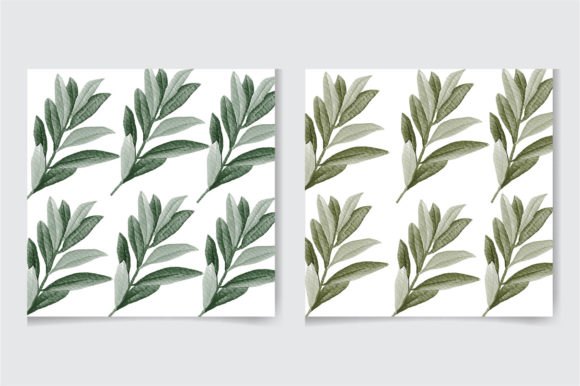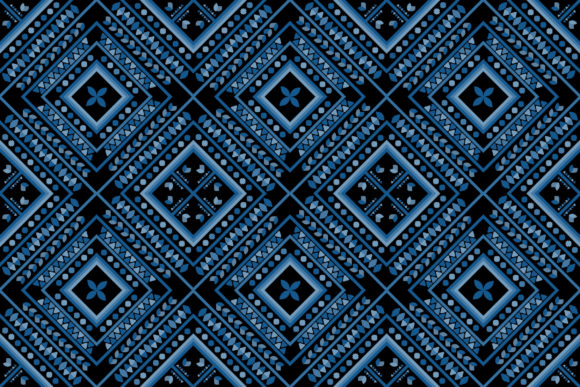
Tropical Leaf in Autumn: A Seamless Fabric Pattern That Bridges Seasons and Styles
Imagine a fabric that carries the lush energy of the tropics while whispering the warmth and depth of autumn. Tropical Leaf in Autumn does exactly that — not as a contradiction, but as a thoughtful fusion. This seamless fabric pattern brings together bold, organic leaf silhouettes with a refined seasonal palette: burnt sienna, amber gold, deep olive, and soft terracotta — all grounded in rich, earthy neutrals. It’s more than just visual appeal; it’s a design solution built for versatility, scalability, and real-world use.
What Makes This Pattern Truly Seamless?
A seamless pattern doesn’t just mean “no visible repeats.” It means the design flows organically across any surface — whether printed on a 44-inch cotton broadcloth or scaled up for a 10-foot-wide upholstery roll. With Tropical Leaf in Autumn, the leaf motifs interlock with subtle variation in size, tilt, and density. Stems curve naturally into one another. Negative space breathes without breaking rhythm. There are no hard edges or jarring transitions — just continuity that supports both intimacy (think pillow covers or scarves) and impact (drapery, wallcoverings, or apparel yardage).
This isn’t achieved by accident. The pattern is mathematically tiled using precise vector alignment and tested across multiple repeat sizes — including the standard 12” x 12”, 24” x 24”, and scalable tile options. That attention to technical integrity ensures your project stays cohesive, whether you’re cutting a single fat quarter or ordering 50 meters from a digital printer.
Why Designers Reach for Tropical Leaf in Autumn Today
In a market saturated with either hyper-minimalist geometrics or overly literal botanicals, Tropical Leaf in Autumn stands out by balancing abstraction and realism. Its leaves suggest monstera, philodendron, and bird-of-paradise — familiar enough to feel welcoming, stylized enough to avoid cliché. The autumnal tones add emotional resonance: warmth without heaviness, richness without opulence.
Interior designers use it for:
- Custom upholstery — especially on curved sofas or dining chairs where seam visibility matters;
- Bedding ensembles — duvet covers and shams that layer beautifully with solid linens or textured throws;
- Commercial spaces — hotel lobbies and boutique offices seeking personality without visual fatigue.
Fashion and textile artists apply it to:
- Scarves and wraps — where the 1:1 ratio allows clean, centered placement on square formats;
- Modern kimono-style robes and lounge sets — playing with drape and scale;
- Small-batch tote bags and pouches — where the pattern’s cohesion enhances perceived quality.
The Power of the 1:1 Ratio — Simpler Than It Sounds
The 1:1 ratio might seem like a small detail — but it’s quietly transformative. Unlike rectangular repeats (e.g., 12” x 18”), a square tile gives you total control over composition. You can rotate it 90°, mirror it horizontally or vertically, or offset it diagonally — all without disrupting flow. That flexibility matters when adapting to irregular garment panels or non-standard wall dimensions.
More importantly, the 1:1 ratio streamlines production. Digital printers love square files. So do embroidery digitizers and laser-cutting software. Even if you’re hand-printing with blocks or stencils, a balanced, symmetrical tile reduces setup time and minimizes misalignment risk. It’s not just aesthetic convenience — it’s workflow efficiency baked into the design.
Your Editable Files — Designed for Real Workflows
Every download of Tropical Leaf in Autumn includes three essential file types — each serving a distinct purpose in your creative pipeline:
AI File (Adobe Illustrator)
The native vector source. Fully layered, with editable swatches, grouped motifs, and unlocked paths. Change colors in seconds. Adjust leaf density with the Width Tool. Swap out individual elements — say, replace a larger leaf with a simplified version for a children’s line. This is your master file: the foundation for customization, licensing, or collaboration with other designers.
EPS File
The universal vector standard. Opens reliably in CorelDRAW, Affinity Designer, InDesign, and older versions of Illustrator. Ideal for print service providers who require backward compatibility. Also preferred for large-format output — think trade show banners or vehicle wraps — where resolution independence is non-negotiable.
JPG File (High-Resolution, 1:1)
A crisp, 300 DPI raster version — perfect for quick mockups, client presentations, or social media previews. Use it in Canva, Figma, or PowerPoint without wrestling with vector imports. Just drag, drop, and visualize — no plugins needed.
All files maintain consistent color values (CMYK and RGB embedded), so what you see on screen translates faithfully to fabric dye or pigment ink. No surprises at the print shop.
How to Choose — And When to Adapt
Before downloading, consider your end use. Are you printing on silk? Cotton sateen? Recycled polyester? Each substrate interacts differently with color depth and motif clarity. For lightweight fabrics, you may want to lighten the background tone slightly in the AI file to prevent visual weight. For upholstery-grade canvas, boosting contrast in the JPG preview helps anticipate how shadows will read at scale.
Also ask: Will this be part of a larger collection? Tropical Leaf in Autumn was intentionally designed with tonal harmony in mind — its base palette pairs effortlessly with charcoal grays, warm creams, and muted rusts. If you're building a seasonal capsule, try pairing it with solid coordinates in matching CMYK values (provided in the AI swatches) for instant cohesion.
And don’t overlook licensing. This pattern is royalty-free for commercial use — meaning you can sell products made from it without per-unit fees. But redistribution of the files themselves (e.g., reselling the AI as your own) is prohibited. Always check the license summary included in your download folder — clarity here prevents future friction.
Real Projects, Real Results
A Brooklyn-based homeware brand recently launched a limited run of napkin sets using Tropical Leaf in Autumn. They started with the AI file, swapped two accent colors to match their existing ceramic glaze palette, then exported a custom 18” x 18” repeat optimized for their narrow-width linen. Result? A cohesive, shelf-ready product line that sold out in 72 hours — with zero repeat-related complaints from sewists or customers.
Meanwhile, a sustainable fashion label in Lisbon used the JPG file to pitch a resort collection to buyers. Because the 1:1 format rendered cleanly on tablet screens during virtual meetings, buyers could zoom in and assess motif fidelity instantly — no need for PDF attachments or follow-up calls. The speed of approval surprised even their sales team.
Final Thought: Pattern as Quiet Confidence
Great fabric patterns don’t shout. They settle in — supporting form, enhancing texture, and inviting touch. Tropical Leaf in Autumn works because it respects both the craftsperson’s process and the wearer’s experience. It’s technically sound, seasonally intelligent, and creatively generous. Whether you're drafting a first garment prototype or specifying textiles for a 200-room hotel renovation, this pattern meets you where you are — and gives you room to grow.
It’s not just about leaves. It’s about intention — in color, in repetition, in file structure, and in how deeply a design understands its role in someone else’s making.